A federal district court judge has issued a ruling disqualifying Bill Essayli, a senior federal prosecutor in Southern California, from supervising or participating in two ongoing criminal cases. The court determined that Essayli has been operating unlawfully as a "de facto" U.S. attorney for the region.
U.S. District Judge J. Michael Seabright delivered his decision on Tuesday, stating that Mr. Essayli is barred from involvement in the specified prosecutions. However, the implementation of this disqualification will not be immediate, providing the Justice Department an opportunity to seek a stay while pursuing an appeal.
"The President and the Attorney General have every right to select supervisors within the Justice Department," Essayli remarked, adding, "ultimately, this question will be decided by the Supreme Court, and I look forward to serving in my current role until then."
Background on Appointment Controversy
Mr. Essayli's tenure began as an interim U.S. attorney, an appointment that concluded after its mandated 120-day period. Following this, then-Attorney General Pam Bondi subsequently designated him as a special attorney and also appointed him as the first assistant U.S. attorney. Critically, he has never undergone formal nomination by the President nor received confirmation from the U.S. Senate for the principal U.S. attorney position.
Judicial Scrutiny and Revised Authority
Judge Seabright had previously scrutinized this appointment structure, concluding that it did not lawfully establish Mr. Essayli as the acting U.S. attorney. Despite this, the judge initially permitted him to continue overseeing prosecutions under his alternative titles.
The situation evolved after the Ninth Circuit Court of Appeals issued a ruling earlier in the summer that challenged a similar prosecutorial arrangement involving a federal prosecutor in Nevada. This precedent prompted Judge Seabright to re-examine Mr. Essayli's role, according to reports in the Los Angeles Times.
In response, Attorney General Todd Blanche issued a modified designation last month. This revised directive aimed to limit Mr. Essayli's authority, seeking to differentiate his position from the circumstances in the Nevada case. Nevertheless, Judge Seabright concluded that even with these adjustments, the modified arrangement still conferred sufficient authority upon Mr. Essayli for him to effectively occupy the vacant U.S. attorney position.
"In sum, Essayli is unlawfully serving as a 'de facto' United States Attorney," Judge Seabright explicitly stated in his written ruling.
Impact on High-Profile Voter Integrity Case
This ruling comes at a time when Mr. Essayli has been a key figure in a significant Justice Department initiative. This effort challenges the state of California over what the administration asserts are more than 20,000 registered voters who are likely not citizens.
The Justice Department has formally requested a federal court to mandate that ballots cast by these individuals be segregated pending a review of their eligibility. U.S. District Judge David O. Carter indicated that he would issue a decision on the administration's request on Wednesday.
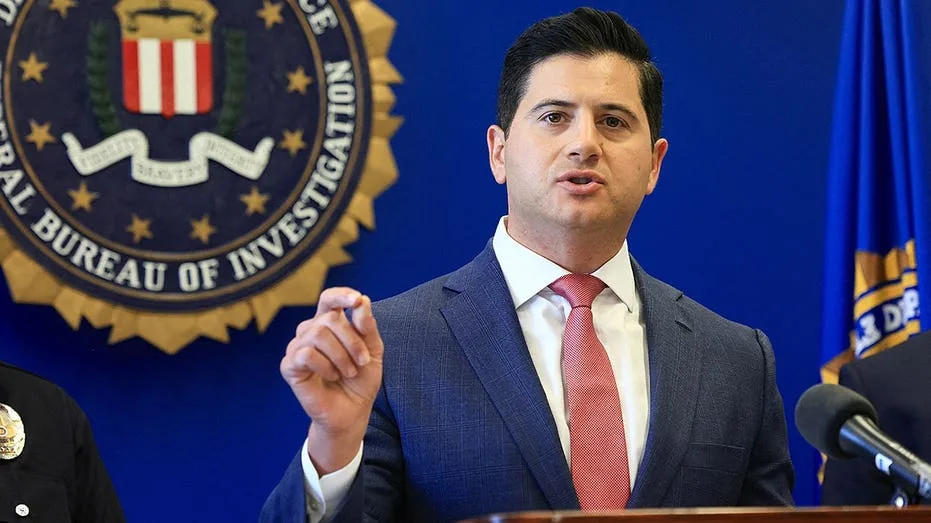
During a press conference held on Tuesday, Mr. Essayli commented on the broader implications of the California voter case.
"I think this case is really on the forefront of the administration's battle to fight for election integrity," Essayli stated. "We wanna stop illegal voting. We don't wanna chase it later," he further elaborated.
When questioned by reporters during the same conference about Judge Seabright's disqualification ruling, Mr. Essayli offered a concise response:
"That case will be decided by the Supreme Court."