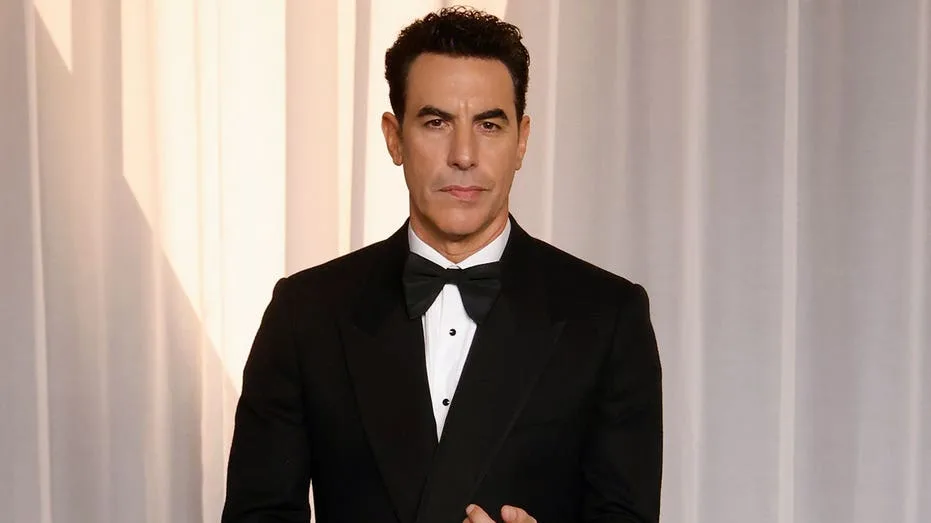
Sacha Baron Cohen, known for his audacious and immersive comedic roles, has indicated that his upcoming film, "Ali G: Who Iz I?", will be his final venture into the distinctive, character-driven style that brought him international fame. The 55-year-old actor recently confirmed his decision, signaling a shift in his creative direction.
"I want to do stuff that challenges me," Cohen stated, clarifying that this does not mean a return to past successes. "So again, I’m not doing 'Borat 3,' which also would be incredibly challenging. Again, this movie I just did is the most challenging movie I’ve ever done, but I’m not doing more."
Societal Commentary Through Satire
While Cohen has previously suggested he would step away from this form of comedy, he chose to make "Ali G: Who Iz I?" driven by a profound concern for contemporary society. He expressed being "terrified of where our society is headed" and views his comedic work as a vital tool for social commentary.
He elaborated that his films provide a platform to "show the extremism on both sides of the political spectrum and the danger of virtuous violence." Beyond its social purpose, Cohen also aimed to produce a genuinely entertaining experience, adding that he "wanted to make the funniest film that’s ever been made."
"These really are the hardest movies to make," he reflected. "But I suppose I made it because I’m scared of this world of conspiracies and lies that are spread by social media and now by AI." Cohen emphasized the critical importance of shared understanding: "If we don’t have these shared facts, then democracies crumble, and we can’t have a tolerant society. And to make people laugh is therapy."
The Physical and Logistical Demands of Immersive Filmmaking
Throughout his career, Cohen has highlighted the inherent risks and extreme physical demands associated with his unique brand of comedy. He described these projects as "dangerous to make" and "incredibly demanding" on the body, though he and his team prioritize safety, striving to "limit the risks and keep everybody safe."
He detailed a particularly complex sequence from his latest film, characterizing it as "an eight-hour continuous scene that takes place over 12 locations" and was filmed as "a continual shot." This intricate segment featured numerous elements: "There’s gunfire in it. There’s a medical procedure. There are drones, there are explosions, and it’s taking place in the desert."
The physical toll of such intense filming conditions was underscored by a warning Cohen received from a veteran stuntman. Due to wearing a prosthetic head within a fat suit, the stuntman cautioned, "You will go to hospital if you make this movie," predicting severe dehydration that could lead to being "in hospital for two weeks."
To mitigate these dangers, Cohen enlisted an "endurance specialist who does the Tour de France" to be present throughout the shoot. Despite these precautions, he noted that "a number of people went to the hospital for dehydration."
Navigating Personal Risk for Artistic Vision
Despite the hazardous nature of his work, Cohen reassured audiences that he maintains clear boundaries regarding his personal safety. "I will never do a scene if I think I’m actually going to die," he asserted.
He recounted an instance during the production of the first "Borat" film where he decided to cancel a scene. Observing a police officer with a gun on his thigh, Cohen inquired about the reason, to which the officer replied he needed to be "really fast to draw in this area." When asked about the officer's proximity, the response was, "I’ll be with you within three minutes." Recognizing the potential danger, Cohen concluded, "I realized that was not a good thing to do, so I pulled that scene."
Conversely, for the second "Borat" installment, Cohen consciously chose to film a segment at a gun rights rally, fully aware of the potential for serious harm. He explained his rationale, stating, "I felt it was an important film to be made."
A Celebrated Career of Satire and Performance
Sacha Baron Cohen's groundbreaking work in satirical comedy began with his breakthrough in 2000 on "Da Ali G Show." He achieved widespread international acclaim with the release of "Borat" in 2006.
His subsequent character-based projects include "Bruno," "The Dictator," "Who is America," and "Borat Subsequent Moviefilm." Beyond his comedic endeavors, Cohen has also garnered recognition for dramatic performances in films such as "The Trial of the Chicago 7," "Les Misérables," and the series "Disclaimer."
His risk-taking approach has been met with critical success, earning him two Academy Award nominations for writing "Borat" in 2007 and "Borat Subsequent Moviefilm" in 2021. He also received an acting nomination for his role in "The Trial of the Chicago 7."