Initial Air Monitoring 'Best Case Scenario' After Iowa Chemical Detonation, EPA Reports
Environmental Protection Agency officials report initial air monitoring results as a 'best case scenario' following the controlled destruction of a hazardous chemical in Middletown, Iowa, while further evaluations continue.
U.S.·

Lee Zeldin, Administrator for the Environmental Protection Agency (EPA), characterized the initial air monitoring data collected after Wednesday's controlled detonation of a hazardous chemical stockpile in Iowa as a "best case scenario." This positive assessment comes as officials prepare to disclose outcomes from further environmental evaluations.
Zeldin stated, "We only have measurements of 0.0, sometimes referred to as zero detect, sometimes referred to as non detect." He further elaborated on the significance of these findings, noting, "It's not that we just had a small elevation of lead being detected in our air monitoring. We had 0.0 readings on our air monitoring, and that's certainly a best case scenario."
Despite these encouraging initial air monitoring outcomes, Administrator Zeldin underscored that the agency is actively continuing its comprehensive environmental assessment. This involves meticulously comparing thousands of samples gathered both prior to and following the controlled explosion. "We are going to make sure we do all of our due diligence," he affirmed.
The EPA administrator indicated that the agency anticipates beginning the release of the initial post-detonation sampling results as early as Friday evening. "Hopefully that confirms what we saw at the air monitor," Zeldin expressed.
Details of the Controlled Detonation
This ongoing evaluative work by the agency follows the controlled destruction of a bomb-making chemical that took place on Wednesday in Middletown, Iowa. Approximately five tons of deteriorated lead azide were detonated after being identified as unsafe and unstable. A primary concern surrounding the operation was the potential for a plume of toxic dust to travel towards Missouri after the explosion.
To thoroughly evaluate the environmental impact, the EPA has gathered over 3,000 samples, encompassing air, water, soil, and dust. This total includes 1,639 samples collected before the detonation to establish a baseline, and an additional 1,618 samples taken afterward to gauge any potential environmental alterations.
In a separate update issued on Friday, the EPA communicated that 88% of the post-detonation sampling had been finalized at residences where pre-blast samples were also taken. The agency is currently working to conclude the remaining assessments.
The agency further stated that comprehensive air monitoring efforts concluded on Thursday afternoon, following a continuous 30-hour period during which no airborne lead was detected.
Presidential Assurance
President Donald Trump also offered assurances to residents on Thursday regarding their safety in the aftermath of the detonation. Speaking to reporters, he declared, "They're 100% safe." The President further commended the U.S. Army, stating they performed a "phenomenal job" with the controlled explosion.
Related Stories

Mexican President Claudia Sheinbaum Formally Protests New DEA Tip Line for Reporting Corruption
Mexican President Claudia Sheinbaum has lodged a formal complaint with the United States regarding a new Drug Enforcement Administration (DEA) tip line. This initiative allows anonymous reporting of corrupt government
Nov 27
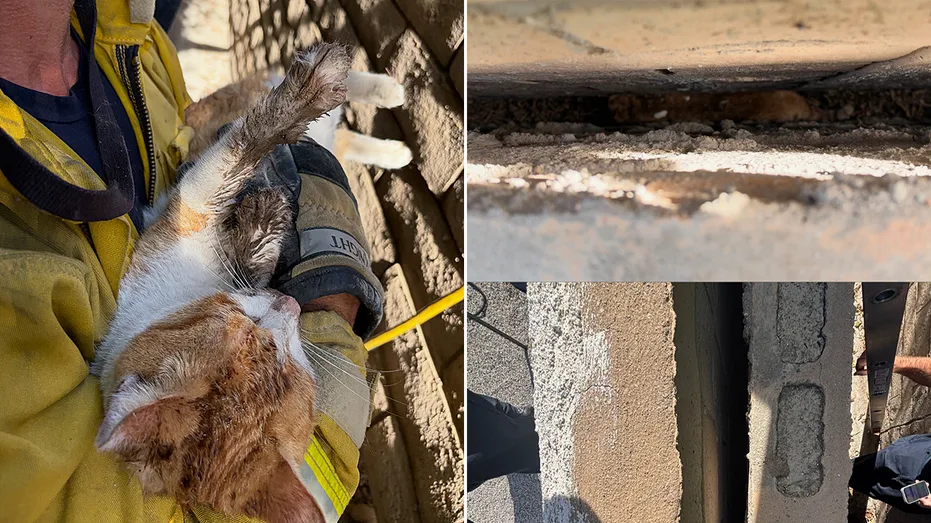
Apple AirTag Leads Firefighters to Cat Trapped in Narrow Wall Crevice
Firefighters in Indian Wells, California, rescued a cat trapped in a tight space between two concrete walls. The owner used an Apple AirTag on the cat's collar to pinpoint its location, enabling emergency services to
Nov 27

Florida High School Student Leader, Five Family Members Perish in Tragic Plane Crash Off Mississippi Coast
Hunter Stokes, a 16-year-old student leader from Fort Myers, Florida, tragically died with five family members in a plane crash off the Mississippi coast. The group was returning from a family fishing excursion when
Nov 27

Fatal Shooting Incident Mars New Jersey High School Football Game
A high school football game in Teaneck, New Jersey, turned tragic Wednesday evening when a man was shot and killed. Police responded to gunshots near the field, finding the victim. Authorities are investigating the
Nov 26