Presidential Pardon for Undocumented Immigrants: A Potential Unprecedented Move for Trump
A discussion has emerged regarding the possibility of a presidential pardon for a segment of the undocumented immigrant population, an act that could redefine immigration policy.
Opinion·
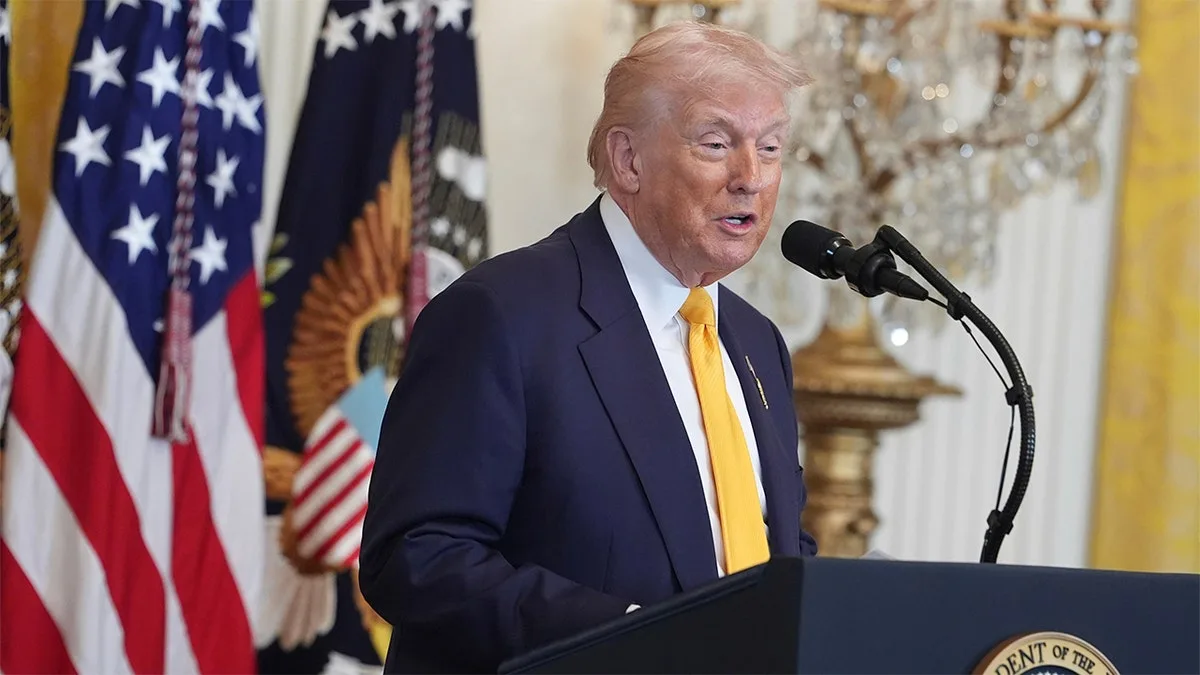
A presidential pardon for a defined group of undocumented immigrants could mark a profoundly significant moment in American policy, potentially solidifying a lasting legacy for President Donald Trump within these communities. Such a sweeping act of executive clemency would be unparalleled in United States history, garnering substantial approval across the American populace and likely being remembered as a landmark achievement by citizens of diverse political perspectives who have long sought a genuine resolution to the ongoing immigration impasse.
President Trump's recent statements suggest a pivotal conversation point: What approach should the nation adopt concerning its undocumented population? This question can be framed specifically around the idea of a presidential pardon for a subset of this population—perhaps 10%—comprising individuals widely considered deserving of remaining free from deportation concerns.
President Trump's Shifting Stance and Border Actions
Estimates place the undocumented immigrant population in the country between 15 and 20 million. While some individuals entered before President Trump's return to office, very few have arrived since spring 2025. President Trump has asserted that the southern border is effectively sealed and remains largely impenetrable. Over 750 miles of border wall have been constructed, with plans for an additional 600 miles before the end of his second term. Funding for Border Patrol is secured through September 2029.
President Trump has consistently maintained that he delivered on his pledge to secure the border.
During a November 8 interview with Ross Douthat on "60 Minutes," President Trump reflected on deportation policies over the past two years, stating, "I think it was too tough." He reiterated, "I think it might be too tough, yeah."
His explanation for this assessment was direct. He suggested that some election outcomes on November 3 were influenced by the deportation of individuals who held stable employment and whose primary violation was their undocumented entry into the country.
He acknowledged the divided national sentiment on the issue: "Now, there is a large part of the country that thinks that they should be put out," he noted. "And there's a large part of the country that thinks that they should be allowed to stay if they're good people working in a landscaping company, or working in a hotel, or doing something, right? And in some cases, paying taxes."
The Scope of Presidential Pardon Power
While Democratic leaders in Congress have an open invitation to the Oval Office to negotiate legislative reforms that avoid broad "amnesty" or a "path to citizenship," President Trump has on several occasions indicated he does not need to await congressional action. He possesses "the very powerful power of the pardon," which he describes as complete and solely within his authority.
This executive authority allows him to issue pardons for any segment of the undocumented population at his discretion, potentially as early as today or on an upcoming holiday.
A presidential pardon could address various federal statutory violations. Illegal entry into the country and illegal return after deportation are criminal offenses. Overstaying a legally issued visa, though a civil offense, also falls within the purview of the pardon power.
The central question becomes: What form could a presidential pardon take that would both align with the views of a substantial majority of Americans and avoid creating an incentive for further undocumented immigration or visa overstays?
Crafting a Targeted Clemency Program
A historical precedent exists in President Jimmy Carter's pardon for Vietnam-era draft dodgers, who had violated Selective Service laws. That pardon, issued on January 21, 1977, included explicit language:
"I, Jimmy Carter, President of the United States, do hereby grant a full, complete and unconditional pardon to: (1) all persons who may have committed any offense between August 4, 1964, and March 28, 1973, in violation of the Military Selective Service Act or any rule or regulation promulgated thereunder; and (2) all persons heretofore convicted, irrespective of the date of conviction, of any offense committed between August 4, 1964, and March 28, 1973, in violation of the Military Selective Service Act, or any rule or regulation promulgated thereunder, restoring to them full political, civil and other rights."
This pardon, issued 50 years ago, was carefully defined. Its accompanying text specifically excluded individuals whose Selective Service violations involved force or violence, as well as those who committed violations while employed by the Selective Service System. It also did not extend to military deserters or those who were absent without leave (AWOL) from the armed forces.
Drawing on this precedent, President Trump possesses the authority to promptly and judiciously address what he perceives as the "too tough" excesses of past deportation policies.
This situation presents President Trump with a unique opportunity, akin to a "Nixon-to-China" moment, concerning undocumented immigrants. While a potential "Trump-Schumer-Jeffries Regularization Act" could emerge in the future—a statute that would avoid general "amnesty" or a "pathway to citizenship" but offer a legislative framework for continued residency for a defined group of undocumented immigrants based on criteria like no felony arrests and a decade or more of presence in the country—President Trump is not obligated to wait for Congress.
Indeed, he might choose not to, ensuring that any decision is clearly attributed to his executive authority. Individuals seeking such a pardon would likely need to provide proof of consistent employment and other evidence of character and commitment, as specified in the pardon's language. A pardon could be highly focused, incorporating specific conditions and exclusions determined by the president.
President Trump could issue such a pardon at any time. The power of pardon is broad and unrestricted. If deployed thoughtfully, such an act of mercy could initially stun the public before largely uniting them in commendation.
Public Sentiment and Political Landscape
The American public generally holds a strong sense of justice and fairness. The deportation of long-term residents who are diligently working and raising families—particularly those with U.S.-citizen children—causes considerable distress across the political spectrum. The continued removal of individuals whose life circumstances resonate with ordinary voters is particularly upsetting to legal residents, family members, and friends of undocumented immigrants.
Hardly a week passes without reports of a deportation that elicits public empathy while simultaneously provoking frustration towards officials simply enforcing existing laws. President Trump has the unilateral capacity to mitigate the most troubling impacts on the collective American sense of justice. While critics would undoubtedly be vocal, they would represent a small fraction of the nation.
Furthermore, the perceived harshness of deportation policies over the past two years could impede Republican efforts to regain majorities in either the House or Senate if these policies persist. While reasonable individuals may differ on the specifics of a presidential pardon or future statutory "regularization" legislation, there is a clear distinction: millions of undocumented immigrants might justifiably face deportation, while at least a million others are demonstrably valuable community members who should not be uprooted from their lives.
The online discourse on this matter often diverges significantly from mainstream American sentiment. However, President Trump appears to recognize the need for a course correction in deportation policy. This creates a significant opportunity for a legacy-defining achievement through his pardon power, and potentially later through legislative compromise, provided that Democrats do not allow extreme elements to politicize a "regularization" bill.
Previous administrations, including Presidents Obama and Biden, did not undertake the foundational step of constructing a border wall before considering such broad measures. President Trump, by contrast, has established this critical precondition by demonstrating that the border is secure. He can now achieve immediate and substantial positive impact through the pardon power and initiate negotiations for a breakthrough, assuming Democrats avoid allowing extreme voices to undermine the political process, and center-right to conservative Republicans refrain from immediately labeling every regularization effort as "amnesty."
As a key topic for discussion, many might consider: If President Trump were to issue a pardon, who should be eligible, and what limitations should be imposed? An approach could begin with a relatively narrow pardon, featuring explicit parameters that exclude felons and individuals arrested for violent crimes. Initially, it might require applicants to demonstrate continuous residency prior to a specific date, such as January 21, 2020. Further conditions could include proof of employment and tax payments, potentially limiting eligibility to adults with U.S.-citizen children. Numerous nuanced details and exclusions would require careful deliberation by the White House Counsel and their team, presenting various pardon options for the president's consideration.
While online discussions on such a topic might be contentious, they would likely not reflect the broader public sentiment. President Trump already senses the necessity for policy adjustment. Should a presidential pardon be issued, it warrants thoughtful consideration by serious individuals of good faith, with reactions guided by reason.
A meticulously structured pardon could profoundly change the lives of over a million people, who would thereafter likely remain steadfast in their support for Trump. It would alleviate an immense burden from stable, law-abiding families who work diligently, have no criminal inclinations, and have raised U.S.-citizen children in this country. Such a pardon should be straightforward to comprehend and implement, potentially granting permission to remain in the country contingent on refraining from serious offenses.
This act of clemency would immediately shift the focus of the deportation debate away from the cases that trouble three-quarters or more of Americans, many of which frequently stir public concern. "Maybe we could touch the subject of immigration," President Trump remarked.
His inclination to address this issue is well-founded. If he were to do so with a pardon that satisfies the vast majority of Americans, that action would indeed be a golden one.
Related Stories

AI's Future and Copyright Law Collide: The Debate Over Fair Use and Creator Compensation
Major news organizations are suing AI companies over the use of copyrighted material for training, sparking a debate on "fair use." The Department of Justice's broad interpretation threatens creator compensation and may
Nov 25
Amid Escalating Cyber Threats and Infrastructure Failures, Public Seeks Assured Leadership
A growing public anxiety surrounds recent widespread outages, hacking incidents, and the rise of AI. This unease highlights a perceived lack of decisive leadership in addressing complex technological vulnerabilities and
Nov 23
Systemic Stagnation: Why Essential Services and National Security Face Mounting Challenges
Recent widespread disruptions, including an FAA ground stop and major email system collapse, highlight growing systemic vulnerabilities. Meanwhile, an alleged espionage scandal involving a tech CEO and a suspected
Nov 16
Stephen Miller's White House Appointment Sparks Unprecedented Immediate Backlash
Following the announcement of Stephen Miller's new high-level White House role, an intense wave of criticism from media figures and political opponents quickly emerged. Commentators noted the swiftness and ferocity of
Nov 9